Children’s eyecare and the Kidz Zone
Free NHS sight tests, an optometrist who is good with children, lenses that slow short-sight, and frames that survive the playground. Kids go free.
When should my child have their eyes tested?
By the age of three, and earlier if you have any concern. A child does not need to know their letters: we use picture matching, shapes and objective tests that measure the prescription without any answers at all. Even babies can be examined.
Vision keeps developing until around the age of eight. A squint, a cataract, or a big difference between the two eyes can stop one eye developing properly, a condition called amblyopia or lazy eye. Caught early, it is treated with glasses and sometimes patching, and the earlier treatment starts, the better the result. Caught late, the loss can be permanent. School vision screening is useful but is not a full examination.
- NHS-funded sight tests for under-16s, and for 16 to 18-year-olds in full-time education
- NHS vouchers towards glasses, and Kidz Zone frames the voucher covers in full
- Myopia control for children who are becoming short-sighted
- Visual stress and colourimetry assessments for reading difficulties
Signs worth a sight test
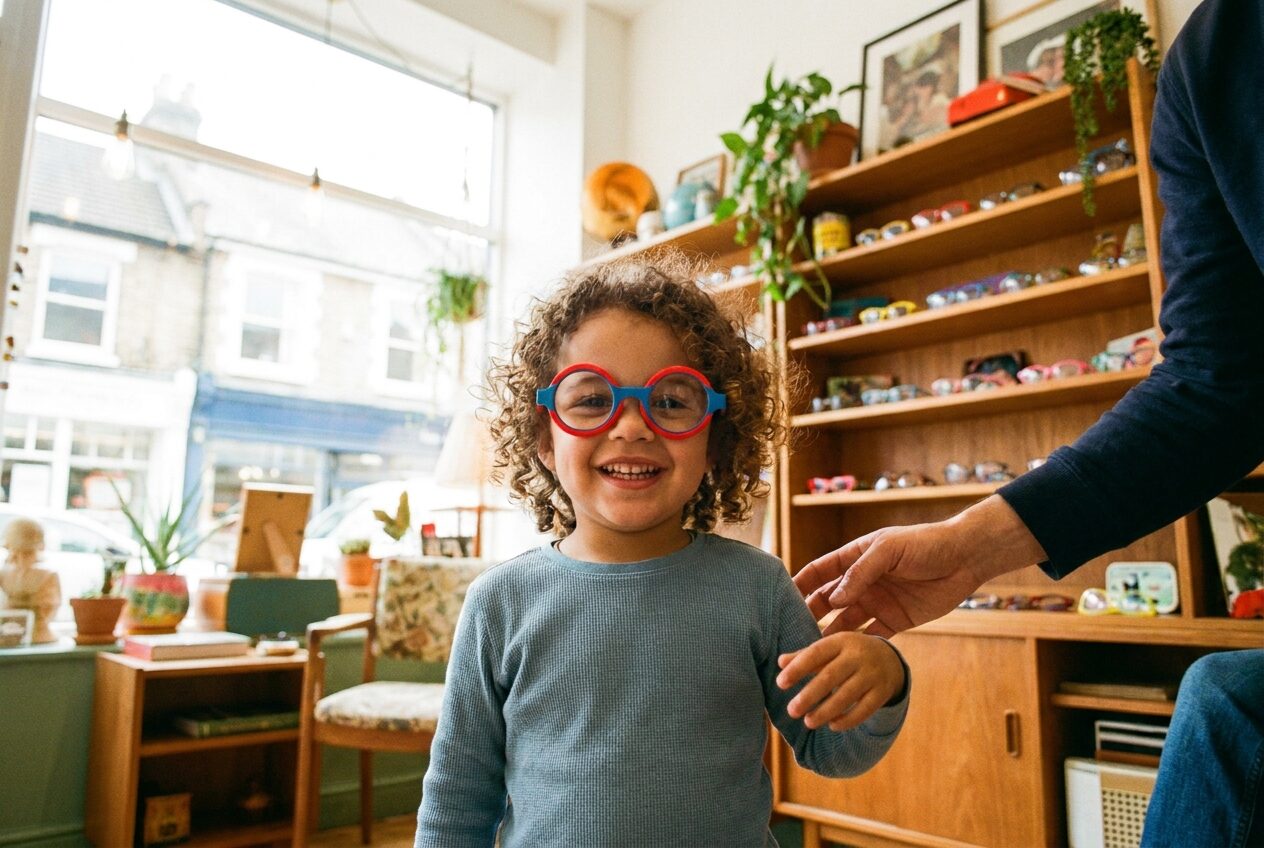
Children rarely complain about their vision, because blur is all they have ever known. Watch for these instead.
At home
- Sitting very close to the television or holding books and tablets close
- Rubbing eyes, blinking a lot, or one eye turning in or out
- Headaches, especially after school
- Clumsiness, or losing interest in reading
At school
- Struggling to see the board, or copying from a neighbour
- Losing their place when reading, or reading slowly
- Complaints that the words move or the page is too bright
- Falling behind with no obvious reason
The Kidz Zone
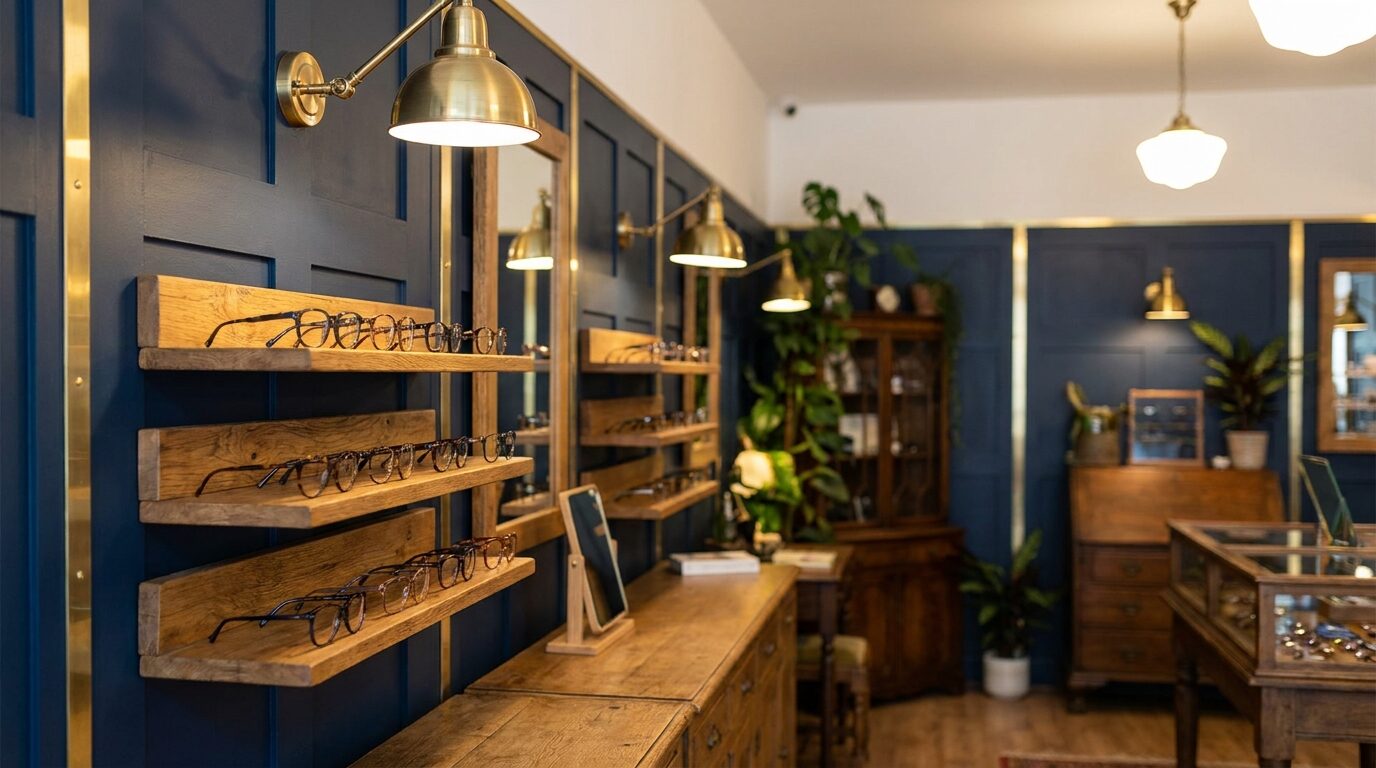
Our children’s frame area has something for every age, from very small children to fashion-conscious teenagers. Frames for children need to fit properly and take a knock, so we fit and adjust every pair by hand and adjust them again whenever they need it, free of charge.
Under-16s, and under-19s in full-time education, are entitled to an NHS voucher towards glasses. We keep a range of frames that the voucher covers in full, so a first pair of glasses need not cost anything.
Becoming short-sighted?
Short-sight usually appears between six and thirteen and gets worse as the eye grows. We offer two lens options designed to slow that growth: EyeDream Ortho-K overnight lenses and MiYOSMART spectacle lenses. The earlier we start, the more there is to gain.
What happens at a child’s eye test
Around 30 minutes. We check how each eye sees, whether the eyes work together, the prescription, and the health of the eyes inside and out. We explain everything to your child as well as to you, and nobody gets told off for wriggling.
Questions parents ask us
My child cannot read yet. Can you still test their eyes?
Yes. We use pictures, shapes and matching games, and instruments that measure the prescription objectively. No reading is needed.
Does my child need glasses all the time?
It depends on the prescription and the reason for it. We tell you exactly when they should be worn and why, and write it down.
How often should children be seen?
Usually every year, or as we advise. Children’s eyes change quickly and a prescription that was right last year may not be now.
Are children’s glasses free?
The NHS voucher covers a range of our children’s frames and lenses in full. If you choose a frame outside that range, the voucher is taken off the price.
Related pages
- Myopia control slowing short-sight in children
- Colourimetry and visual stress when words move on the page
- NHS sight tests who qualifies and what the voucher covers
Book your child’s eye test
Call 0161 432 8101 or request an appointment online. Sight tests for under-16s are free.